Love to hear from you!
Get in touch.

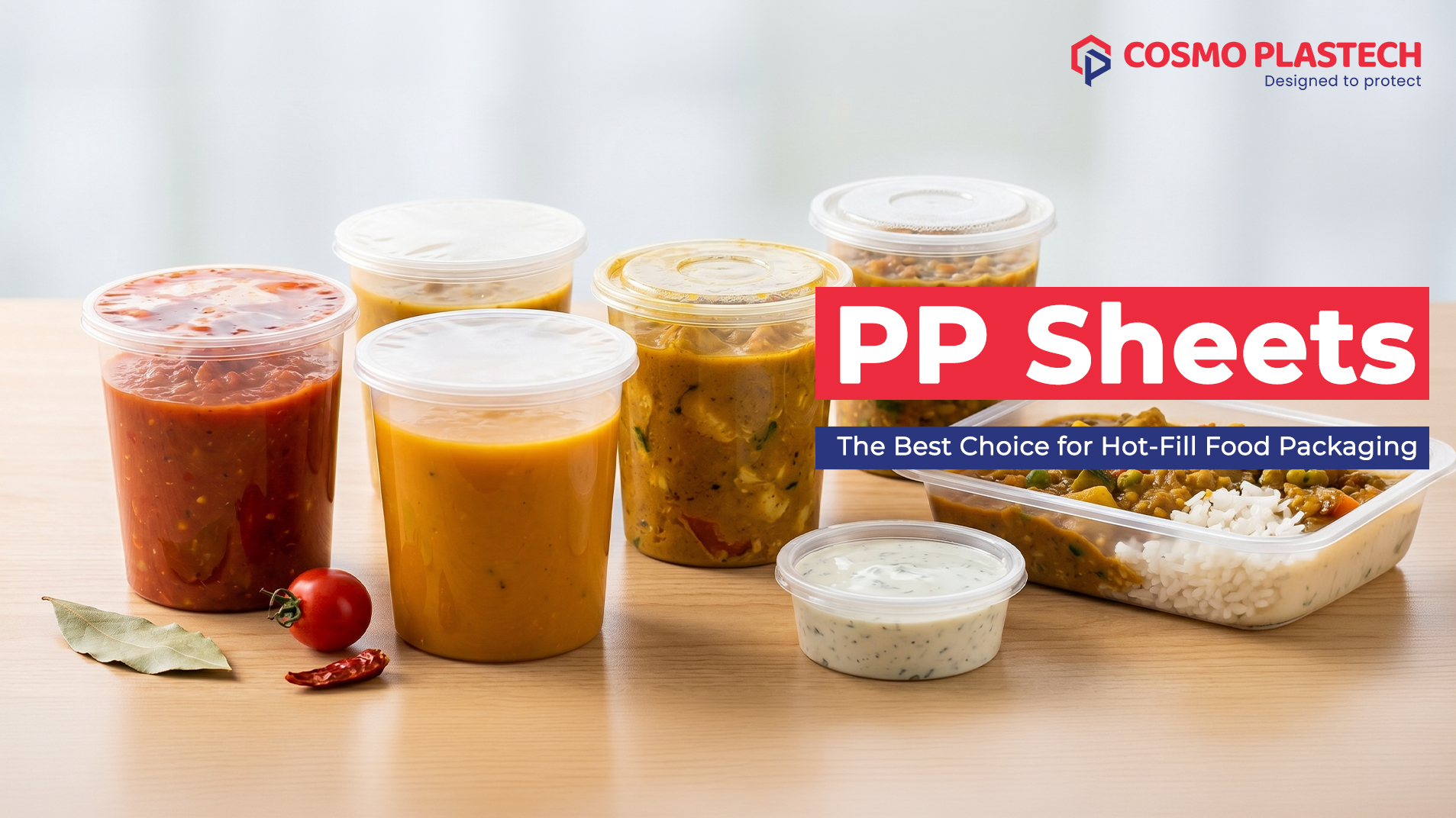
Every food product that leaves a production line hot, whether it is a pasta sauce, a fruit juice, or a ready-to-eat curry, puts its packaging through a real test. The container must survive a sudden rush of heat, hold its shape, and protect that food on the shelf.
Not
every material can do that without buckling, warping, or compromising food
safety. This is exactly why hot-fill packaging demands a smarter material
choice - containers made using PP sheets.
Polypropylene
sheets have become the go-to material for hot-fill food packaging because they
naturally withstand high temperatures without warping, shrinking, or leaching
chemicals into food. These sheets also provide the heat resistance, food
safety, and shelf-life performance brands require.
Blog
Summary
·
Need
for hot fill packaging
·
Why
PP sheets are ideal for hot fill packaging
·
Possible
applications
·
FAQs
Hot-Fill
Food Packaging
In
hot fill packaging, the product is heated to a specific temperature and then
filled into the container while still hot. The container is sealed immediately,
and the heat of the product itself acts as a sterilisation step, killing
bacteria and extending shelf life without the need for chemical preservatives
or refrigeration.
How
PP Sheets Are Ideal for Hot-Fill Packaging
Polypropylene
maintains its shape and structural strength even when filled with products at
high temperatures. This means no warping, no panel caving, and no compromised
seals.
Beyond
heat resistance, PP sheets bring a set of qualities that make them uniquely
suited for this application. They sheets are:
· Chemically resistant
· Moisture resistant
· Lightweight
Where
Is Hot-Fill PP Packaging Used - Applications
The range of food products that relies on hot-fill PP sheet packaging is extensive. Here are some applications where these sheets are used:
· Sauces and Condiments
Containers made using PP sheets handle the heat and resist the acidic or oily nature of these products.
·
Soups and Broths
The trays, cups and containers made using PP sheet holds its shape through filling, sealing, cooling, and storage.
· Ready-to-Eat Meals
PP trays used for such meals sit on shelves for longer time, making them ideal for retail, food delivery, and export markets.
· Dairy-Based Dips and
Spreads
PP cups maintain freshness and resist moisture loss over extended shelf periods.
PP
sheets by Cosmo Plastech offer performance brands require for hot fill while
also aligning with the sustainability and recyclability expectations that
retailers and regulators are increasingly demanding. Talk to our rigid
packaging experts today and learn more about our PP sheets for your
application.
Frequently
Asked Questions
Q.
Why is PP preferred over PET for hot-fill packaging?
A.
PP naturally withstands higher temperatures than PET. It holds its shape and
seal integrity even at high fill temperatures.
Q.
Is PP packaging safe for food contact?
A.
Yes. Cosmo Plastech’s PP sheets are BPA-free, chemically inert, and approved
for direct food contact by major global food safety authorities.
Q.
Can PP sheets be used for acidic or oily food products?
A.
Yes, the sheet does not react with acids, oils, or vinegar-based products,
making it ideal for sauces, pickles, dressings, and condiments.
Q.
Are PP sheets recyclable?
A.
Yes. They fall under resin code 5 and are widely accepted in recycling
programmes.
Q.
What types of food products use hot-fill PP packaging?
A.
Common applications include sauces, soups, fruit juices, jams, ready-to-eat
meals, pickles, dairy dips, beverages, and pet food.
Featured Post
Love to hear from you!
Get in touch.