Love to hear from you!
Get in touch.

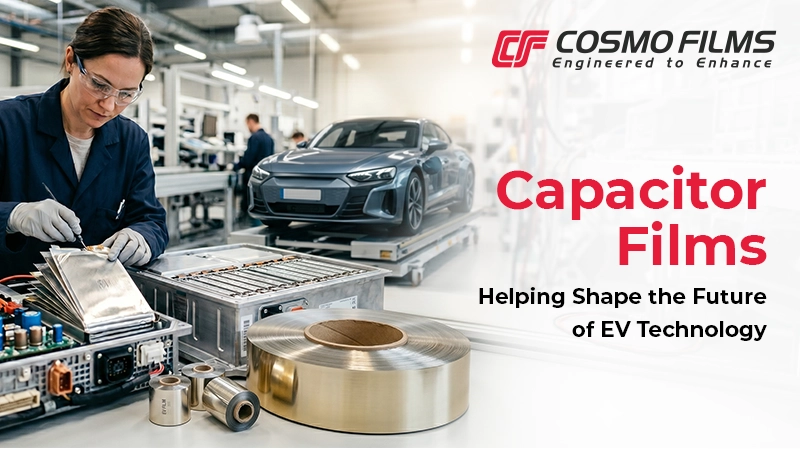
Every electric vehicle relies on dozens of small but mighty components to manage its power safely and efficiently. Capacitor films are one of them. With the sales of EVs climbing globally, demand for these films is growing faster.
Blog Summary
· EVs
need far more capacitor films than conventional cars.
· The
film handles heat, voltage, and constant switching without failing
· As
EVs get faster to charge and more powerful, the demands on capacitor films get
tougher
· A
global supply squeeze is already underway, and it is only going to tighten
· Capacitor films are quietly becoming one of the most strategically important materials in the EV supply chain
EVs Run on More Than Just Batteries
When most people think about what makes an electric vehicle work,
they picture the battery pack and the motor. What sits between those two is the
electronics that convert, regulate, and distribute power. Every time an EV
accelerates, charges, or manages its power systems, electronic components are
switching on and off thousands of times per second. Capacitor films sit inside
the components that keep all of that switching smooth and stable. Without them,
voltage would spike unpredictably, components would overheat, and the whole
system would be unreliable.
Why Capacitor Films Are Important?
The film inside a capacitor is not just packaging; it is the
active part. It stores and releases energy, blocks unwanted current, and must
do all this reliably for the life of the vehicle, often in high-heat
environments and under constant electrical stress.
The most widely used material for this job is a type of polypropylene film made through a stretching process that gives it very precise electrical properties. It handles heat better than most alternatives, does not degrade quickly over time, and has a useful self-healing characteristic — if a tiny fault develops, the film can isolate it without the whole component failing.
Faster Charging Elevating the Bar
The EV industry is in the middle of a significant shift. Charging
speeds that once seemed remarkable — 50kW, then 150kW — are being overtaken by
stations delivering 350kW and beyond. Alongside this, vehicle platforms are
moving from 400-volt to 800-volt electrical architectures to handle higher
power more efficiently.
Both trends put more stress on every electrical component,
including the capacitor films. Higher voltages mean the film has to hold back
more electrical pressure across a thinner layer. Higher charging speeds mean
more heat and more rapid electrical cycling. The films that worked perfectly
well five years ago may not be adequate for the next generation of vehicles.
This is pushing manufacturers to develop thinner, more capable films, which are genuinely difficult to produce on a scale. Getting consistency right, at the volumes the EV market now demands, is a real technical and industrial challenge.
Capacitor films are not glamorous. They do not feature in EV
marketing material or consumer reviews. But they are embedded in every power
conversion step inside the vehicle — and as those vehicles become more
powerful, more efficient, and faster to charge, the films doing that work have
to keep up.
The combination of surging EV volumes, more demanding technical requirements, and a tight supply base makes this one of the more interesting material stories in the automotive industry right now. It is a small component with an outsized role, and the market is only beginning to reflect that.
Ready to explore capacitor film specifications for your next EV
project? Contact our team or request a technical data sheet to get started.
Capacitor Films in Electric Vehicles FAQs
Q. Why do EVs need more capacitor films than regular cars?
A. EVs rely entirely on power electronics to manage energy between the battery and motor. Every conversion step uses film capacitors to keep the current clean and stable.
Q. Does the type of film make a difference to vehicle performance?
A. Yes. A lower-quality film degrades faster under heat and electrical stress, which affects the reliability and efficiency of the power electronics over time.
Q. Are film capacitors the same as the capacitors in consumer
electronics?
A. They use the same basic principle, but automotive-grade film capacitors are built to far tighter tolerances, tested under much harsher conditions, and expected to last far longer.
Featured Post
Love to hear from you!
Get in touch.