Love to hear from you!
Get in touch.

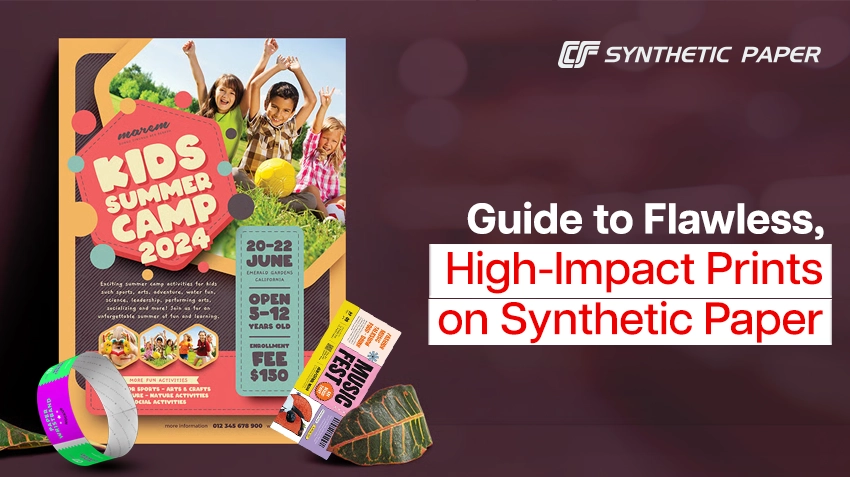
Tear-proof, waterproof, and endlessly durable,
synthetic paper is now a common choice for menus, signage, outdoor labels, ID
cards, and various other applications. But here's the truth: not all prints on syntheticpaper look stunning. One must know the right way to print on this surface
to achieve premium prints. Without the right approach, the colours can look
flat, washed out, or inconsistent. Let's see how to get vivid, high impact
prints every single time and make your application stand out like never before.
Guide to Choose the Right Synthetic Paper
Step 1
Choose the Right Synthetic Paper
Not all synthetic papers are created equal. Some are optimized for
offset printing, others for digital presses, and some for screen printing.
Using the wrong type can limit colour vibrancy.
Look for:
Step 2
Use the Correct Ink or Toner
This water-resistant printing paper is non-porous, meaning
standard inks can struggle to adhere. For vibrant colour, the ink must bond
perfectly to the surface.
Best matches:
Step 3
Calibrate Your Printer for Synthetic Paper
Even premium synthetic paper needs a proper printer setup.
Uncalibrated machines can cause under- or over-inking, resulting in dullness or
colour shift.
What to do:
Step 4
Control Your Environment
Colour output isn't just about the printer - it's also about where
you print.
Step 5
Work With a Specialist Supplier
If you're serious about consistently stunning results, partner
with a supplier, like us, who knows non tearable paper inside out. A
good supplier will:
Our Promise: At Cosmo Synthetic Paper, we source only top-grade, durable synthetic
papers engineered for precision printing. Every sheet is tested for brightness,
smoothness, and coating consistency, so your prints look rich, sharp, and
unforgettable.
Ready to Upgrade Your Printing Materials?
Designed for excellent prints, our synthetic paper enhances colour
depth and contrast for truly eye-catching results. Precision-coated surfaces
guarantee superior ink adhesion, preventing dullness or smudging, while our
consistent, quality-controlled supply means you can get perfect results across
every project without compromise.
Contact us, the best synthetic paper manufacturer, or
request a free sample!
Featured Post
Love to hear from you!
Get in touch.