Love to hear from you!
Get in touch.

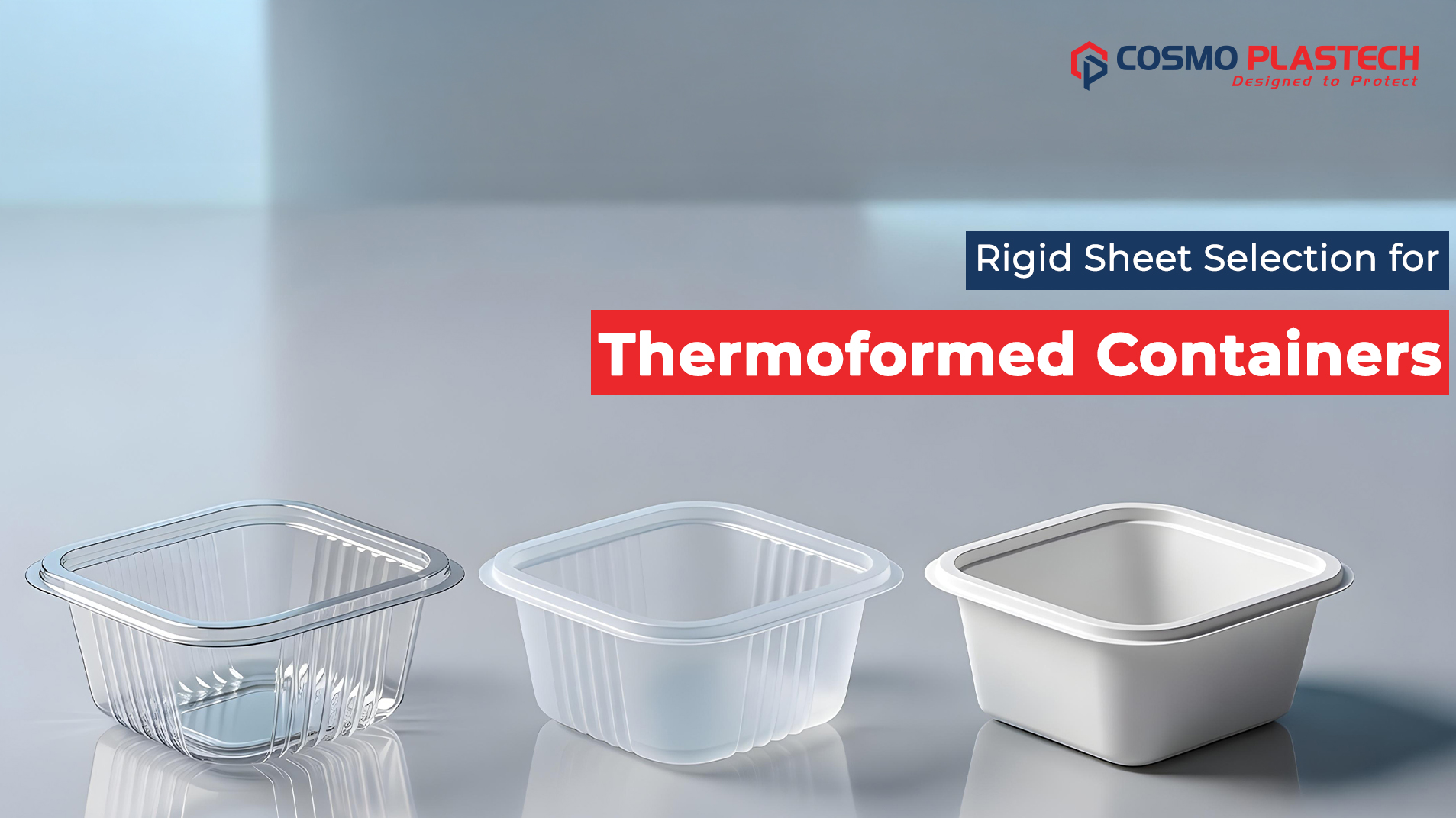
Selecting the right material is a critical
step when designing an effective thermoformed container. The choice of
material used directly influences product protection, shelf life, visual
appeal, regulatory compliance, sustainability, and overall cost. With multiple rigid
sheet options available - APET, PP, HIPS, and other PET-based materials -
understanding their differences can help make an informed decision.
Let’s learn about the most used materials for
thermoformed containers, helping you choose the best option based on
performance and end-use needs.
In this blog, we will learn that:
Do Material Matters in Thermoformed Containers?
Yes, as thermoforming involves heating rigid
plastic sheets and shaping them into containers using moulds, it is
important to select the right material. While the process is similar across
materials, material properties help determine how the final container performs
in real-world conditions.
Key factors influenced by material choice include:
Understanding the strengths and limitations
of each sheet ensures the thermoformed container protects the product while
meeting market and regulatory expectations.
Rigid Sheets Ideal for Thermoformed Containers
1. APET Sheet
One of the most widely used materials for
thermoformed food containers, APET sheets are especially used where
product visibility and rigidity are essential.
Key features:
2. PP Sheet
Polypropylene, commonly known as PP, is known for its thermal resistance and versatility, making it a
preferred choice for containers exposed to higher temperatures.
Key features:
·
Suitable for hot-fill and
microwave use
·
Good flexibility and impact
resistance
·
Lightweight
·
Good Transparency
·
Higher mechanical strength
·
Better rigidity at lower wall
thickness
3. HIPS Sheet
HIPS is a
versatile and economical material that is easy to machine & thermoform. It
is often recommended when impact resistance and low cost are desired. This
material is also easy to print, seal, and glue.
Key features:
·
Cost-effective
·
Easy to thermoform
·
High impact strength
·
High mechanical strength
·
Outstanding formability
Factors to Consider When Selecting the Right Material for Thermoformed Containers
Selecting the right sheet involves
balancing multiple requirements. It is important to have the answer to the
questions mentioned to ensure the chosen rigid sheet delivers optimal
performance.
·
What’s the end-use application?
Is the container for fresh food, ready meals, or non-food products?
·
Will the container be
refrigerated, frozen, or microwaved? What will be the freezing/heating
temperature range?
·
Are there any visual
requirements? Is high clarity needed for product display, or is opacity
required?
·
How does the rigid sheet
perform in high-speed thermoforming operations?
·
Does the packaging need to
support recycling or material reduction targets?
To Sum Up,
Each rigid sheet serves a distinct packaging
purpose:
·
APET leads in clarity and
recyclability
·
PP excels in heat-resistant
applications
·
HIPS offers economical rigidity
Understanding these differences is essential
to crafting effective, reliable thermoformed containers.
If you are still confused about which rigid sheet is ideal for you, reach out to us, and our experts will help you find the ideal one. Visit www.cosmofilms.com/plastech/category/rigid-sheets and explore our advanced rigid sheets designed for food containers!
Featured Post
Love to hear from you!
Get in touch.