Love to hear from you!
Get in touch.

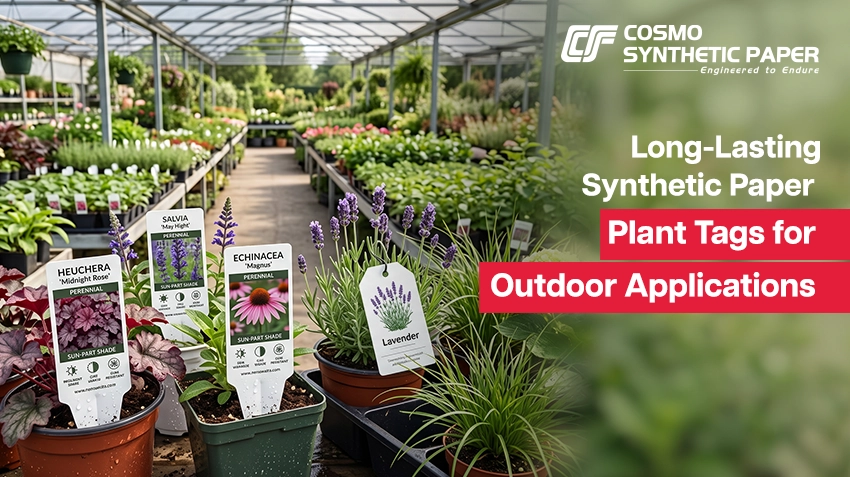
Rain, watering, humidity and daily handling can quickly turn an ordinary plant tag into an unreadable piece of paper. For nurseries and garden centres, labels need to stay clear and intact from the moment a plant is tagged. This is where synthetic paper offers a practical advantage.
Made to deliver greater durability than conventional paper, synthetic paper plant tags can withstand moisture, tearing and frequent handling while retaining clear, high-quality print. This makes them suitable for identifying plants, displaying care instructions, adding pricing information, and even connecting customers to digital content through QR codes.
Reasons Synthetic Paper Is Ideal for Plant Tags
Watering and rain are unavoidable in nurseries and gardens. Water resistant paper prevent tags from becoming soggy, distorted or difficult to read. This makes it suitable for plants displayed both indoors and outdoors.
Plant tags are frequently moved, handled and exposed to soil, branches and gardening equipment. Tear-resistant paper helps maintain the physical integrity of the tag, reducing the risk of damaged or missing information.
A plant tag needs to communicate information quickly. Synthetic paper offers a smooth, printable surface for plant names, botanical information, care instructions, pricing, barcodes and QR codes. Depending on the grade, it's compatible with most modern print technologies.
Whether identifying flowering plants, herbs, vegetables, shrubs or saplings, durable tags help nursery teams and customers distinguish between different varieties. Synthetic paper tags can retain their appearance through the plant’s sales cycle, supporting better product identification.
Modern plant tags can provide more than printed information. A QR code can connect customers with detailed care instructions, planting guides, product information or a nursery’s website. Synthetic paper provides a suitable printable surface for incorporating these scannable elements.
Applications of Synthetic Paper Tags Across Nurseries and Garden Centres
Synthetic paper can be converted into different tag formats depending on the requirements of the application. Common applications include:
Right Material for Durable Plant Tags - Cosmo Synthetic Paper
The right plant tag needs to balance durability, printability and readability. Synthetic paper, particularly polypropylene-based grades, can provide a combination of water resistance, tear resistance and print compatibility that conventional paper may not offer. With the right grade and printing process, synthetic paper can help nurseries create plant tags that remain informative, legible and professional throughout their intended use.
Frequently Asked Questions
1. What is synthetic paper used for in nurseries?
Synthetic paper is used for plant tags, nursery labels, inventory labels, care tags, price tags and QR-code labels.
2. Is synthetic paper suitable for outdoor plant tags?
Yes, suitable grades of synthetic paper offer water and tear resistance, making them suitable for many outdoor horticultural applications.
3. Can synthetic paper plant tags withstand watering?
Yes, water-resistant paper can maintain its structure and readability when exposed to routine watering.
4. Can synthetic paper be printed on?
Yes, synthetic paper delivers excellent prints.
5. Is synthetic paper tear-resistant?
Yes, Cosmo Synthetic Paper offers strong tear resistance compared with conventional paper.
Featured Post
Love to hear from you!
Get in touch.