Love to hear from you!
Get in touch.

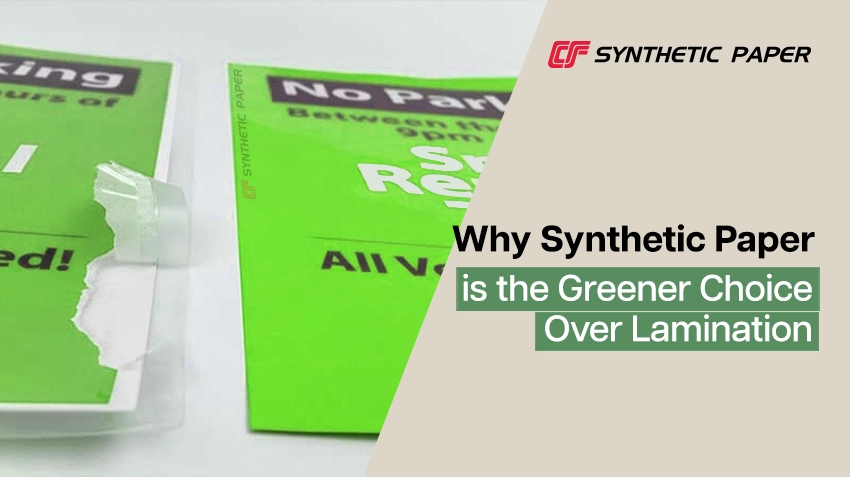
As the focus on sustainability increases, the choice of
preserving printing material has become important. Among choices to preserve
the printed applications, synthetic paper and lamination stand out for
their protective qualities and aesthetic appeal.
But as concerns about environmental impact grow, the question
of choosing between the two arises. Let’s understand both materials and their
environmental footprints to get clarity to this important topic.
Synthetic Paper vs. Lamination
Synthetic paper mimics almost all the properties of
traditional paper – such as printability and feel, but stands out for its
durability, water resistance, and tear resistance. This innovative
material is wood pulp free, adding to environmental advantages.
On the other hand, lamination involves applying a thin
film of plastic over the application to enhance its durability, moisture
resistance, and visual quality. It protects the printed material but adds
complexity to recycling and waste management.
The Environmental Impacts of Production
One notable advantage of synthetic paper is its
pulp-free production process. The production process typically requires less
water and energy.
Conversely, lamination often involves multiple chemical
processes. This layering adds to the overall resource consumption and carbon
footprint. Moreover, the application of lamination is an additional step that
increases energy use.
Durability & Waste Considerations
Durability is a key factor that influences
environmental impact over the product's lifecycle. Synthetic paper is
inherently tear, water, and chemical resistant. It allows for longer use and
reducing the frequency of replacement or disposal. PP synthetic paper is
more easily recyclable where plastic recycling infrastructure exists.
Laminated products, although durable, require plastic
film application on paper, which can hinder recyclability, typically resulting
in landfill disposal.
Recycling & End-of-Life Management
Synthetic paper can often be recycled along with other
plastic materials. It simplifies waste management if proper systems are in
place.
On the other hand, laminated application generally
requires mechanical or chemical separation of the film from the substrate.
These processes are expensive and not widely adopted. The poor recyclability
makes lamination a less sustainable choice once a product reaches end-of-life.
Synthetic Paper - The Future of Eco-Friendly
Printing
PP synthetic paper is revolutionizing the printing and
packaging industry with its unique blend of performance, durability, and
sustainability. It offers exceptional resistance to water, tearing, and UV
exposure, without the need for additional lamination. Its streamlined
production process reduces material use, energy consumption, and waste, making
it an efficient and eco-friendly choice.
Its longer lifespan means fewer reprints and
replacements, while its low water consumption during production adds to its
environmental advantages. As global industries continue to adopt greener
solutions, Cosmo Synthetic Paper stands out as an innovative solution, offering
the perfect balance of functionality, innovation, and sustainability.
Featured Post
Love to hear from you!
Get in touch.